
The annual Reporters Without Borders analysis attributed the decline in index to "pressure on the media to toe the Hindu nationalist government's line."
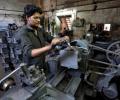
India's manufacturing sector growth recovered from September's eight-month low to 57.5 in October fuelled by faster increases in total new orders and international sales, a monthly survey said on Monday. The seasonally adjusted HSBC India Manufacturing Purchasing Managers' Index (PMI) rose from September's eight-month low of 56.5 to 57.5 in October, indicating a substantial and accelerated improvement in operating conditions.

Human Development -- a measure of a nation's health, education, and average income -- has declined for two years in a row.

Benchmark Sensex closed above the 85,000 level for the first time while Nifty scaled the 26,000 peak at close on Wednesday as fag-end buying in banking and power shares helped stock markets recoup early losses. After a see-saw trade during the day, the 30-share BSE Sensex rose by 255.83 points or 0.30 per cent to settle at an all-time high of 85,169.87. During the day, it surged 333.38 points or 0.39 per cent to hit a record intra-day peak of 85,247.42.

Retail investors have become a force to reckon with in the last 10 years with their ownership of Indian equities rising 800 basis points, or 8 per cent, to 23.4 per cent during this period, suggests a recent note from Morgan Stanley. This number, Morgan Stanley said, is set to rise in the next few years as Indian households are still underinvested in equities. India's demographics, policy framework, investor education and modest positive real rates, it said, will fuel the 'equity cult' in India.

India's manufacturing sector growth eased slightly in July, on softer increases in new orders and output, while cost pressures and demand strength led to the steepest increase in selling prices since October 2013, a monthly survey said on Thursday. The seasonally adjusted HSBC India Manufacturing Purchasing Managers' Index (PMI) moderated slightly from 58.3 in June to 58.1 in July.
Attacks against journalists by supporters of ruling Bharatiya Janata Party increased in the run-up to general elections in the spring of 2019, the analysis alleged.

India's services sector growth quickened in June from May's five-month low, amid a stronger rise in new orders and an unprecedented expansion in international sales, a monthly survey said on Wednesday. The seasonally adjusted HSBC India Services Business Activity Index rose from 60.2 in May to 60.5 in June, pointing to a sharp expansion in output. In the Purchasing Managers' Index (PMI) parlance, a print above 50 means expansion, while a score below 50 denotes contraction.

India is poised to be the third largest global economy by 2030 but rising population presents mounting challenges in basic service coverage and growing investment needs to maintain productivity, S&P Global Ratings said on Thursday. It said emerging economies have high ambitions for the next decade and beyond with India aiming to become a $30 trillion economy by 2047, from the current $3.6 trillion. India is currently the fifth largest economy.

'Invest only in stocks of those companies that deliver on earnings and there is earnings visibility too for the next few quarters.'

Tata Steel was the top loser in the Sensex pack, shedding over 2 per cent, followed by Sun Pharma, ICICI Bank, SBI, Kotak Bank and Dr Reddy's. NSE Nifty dropped 151.75 points to 15,727.90.

After a strong run in the midcap and smallcap indices, which surged 46 per cent and 43 per cent, respectively, on the National Stock Exchange (NSE) during Samvat 2080, analysts suggest that the rally in these segments may pause to catch its breath in Samvat 2081.

The narrative on China is changing post the recent stimulus measures, and it will be hard for global investors to ignore the Chinese markets.

The Reserve Bank of India's (RBI's) interest rate decision, West Asia conflict and trading activity of foreign investors are the key factors that will dictate investors' sentiment in the market this week, analysts said. Moreover, quarterly earnings from IT bellwether TCS, domestic macroeconomic data and movement in global oil benchmark Brent crude would also guide trends in the market. Worsening tensions in the Middle East and foreign fund outflows were the major culprits behind the equity markets sharp fall last week.

The index uses a scale of 0 to 100, where 0 is highly corrupt and 100 is very clean.

'The RBI's MPC will maintain the current policy rates (6.50%) at the policy meeting, given ongoing inflationary pressures.'

Compared with the last round, there is a sharp rise in Indians' concern over the economy, with 46 per cent citing it as a major worry.

The services sector growth in India moderated in February amid softer expansions in business activity, sales and jobs, a monthly survey said on Tuesday. The seasonally adjusted HSBC India Services Business Activity Index registered 60.6 in February, down from 61.8 in January. In Purchasing Managers' Index (PMI) parlance, a print above 50 means expansion, while a score below 50 denotes contraction.

'If it doesn't, it will continue with measures to infuse liquidity, signalling a new cycle,' predicts Tamal Bandyopadhyay.

The heat index in major metro cities in the country has majorly risen since 2010 compared to a decade earlier.

From the 30 Sensex firms, Larsen & Toubro, Reliance Industries, Axis Bank, Asian Paints, Tata Motors, Bajaj Finance, Maruti, Bajaj Finserv, Kotak Mahindra Bank, Titan, Adani Ports and HDFC Bank were the major laggards. JSW Steel emerged as the only gainer.

'A 10 to 15 per cent allocation to gold in portfolios reduces risk without compromising on potential returns.'

Among the Sensex firms, IndusInd Bank was the biggest loser and fell 6.13 per cent, followed by SBI (3.99 pc), Hindustan Unilever (3.82 pc), Axis Bank (3.41 pc) and HDFC Bank (3.23 pc). In contrast, Sun Pharma, Bharti Airtel, ICICI Bank and PowerGrid defied the trend and closed with gains of up to 3.67 per cent. TCS and Bajaj Finserve were the other gainers.

Tech Mahindra was the top loser in the Sensex pack, shedding over 3 per cent, followed by NTPC, IndusInd Bank, Kotak Bank and Reliance Industries. NSE Nifty fell 185.60 points to 17,671.65.
In the Sensex pack, NTPC, Tata Steel, SBI and IndusInd Bank were among the major laggards. In contrast, Wipro, HCL Tech, Mahindra & Mahindra and Nestle were among the nine stocks that defied the trend.

Realised volatility is a measure of actual price volatility, based on past price movements over a specific period of time.

'As the markets are expected to remain jittery in the near term, we advise investors to use this opportunity to enter quality largecaps from a long-term perspective.'
India's extremely poor score in successive years in the global hunger index (GHI) should remind policy makers of the unfinished agenda of liberalisation.

India's manufacturing sector growth climbed to a four-month high in January as a sharper upturn in new orders boosted output growth amid mild cost inflation, a monthly survey said on Thursday. The seasonally adjusted HSBC India Manufacturing Purchasing Managers' Index (PMI) recovered from an 18-month low of 54.9 in December to 56.5 in January. The latest reading highlighted the strongest improvement in the health of the sector since last September.

Wipro was the biggest gainer in the Sensex chart, rising 4.79 per cent, followed by M&M, L&T, Tata Motors, Maruti, Infosys, Nestle India and IndusInd Bank.

On a five-day rolling basis, FPI selling is the highest in 24 years.

Since March 2020, when the Nifty50 plummeted to 7,511 following the announcement of a nationwide lockdown, the stock market has been on an upward trajectory. Over the next four years, the major market index has delivered a remarkable compounded annual growth rate (CAGR) of over 31.5 per cent. In the past year alone, the Nifty50 has gained by 27 per cent, hitting a succession of record highs.

India's services sector witnessed one of the strongest growth rates in over 13-and-a-half years in March on the back of strong demand that spurred sales and business activity, a monthly survey said on Thursday. The seasonally adjusted HSBC India Services Business Activity Index rose from 60.6 in February to 61.2 in March, one of the strongest expansions in total sales and business activity in close to 14 years. In the Purchasing Managers' Index (PMI) parlance, a print above 50 means expansion, while a score below 50 denotes contraction.
India's manufacturing sector output increased at a sharp pace in June as new business continued to flow in amid favourable demand conditions and resulted in record upturn in employment, a monthly survey said on Monday. The seasonally adjusted HSBC India Manufacturing Purchasing Managers' Index (PMI) increased from 57.5 in May to 58.3 in June, indicating a sharper improvement in business conditions. In PMI parlance, a print above 50 means expansion, while a score below 50 denotes contraction.

India's manufacturing sector saw a slower growth rate for the second straight month in May but stayed firmly in expansion mode with global sales increasing to the greatest extent in over 13 years, a monthly survey said on Monday. The seasonally adjusted HSBC India Manufacturing Purchasing Managers' Index (PMI) fell from 58.8 in April to 57.5 in May, signalling a slower but substantial improvement in the health of the sector. The index had climbed to a 16-year high of 59.1 in March.

India is among the worst-performing BRICS nations along with Brazil (ranked even lower than India at 71st this year).
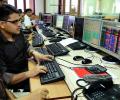
M&M was the biggest gainer in the Sensex chart, rising 6.51 per cent, followed by NTPC, PowerGrid, SBI, HDFC Bank, Asian Paints and Wipro. In contrast, Axis Bank, ITC, HUL, Nestle India and Sun Pharma were among the laggards.

Then prime minister Manmohan Singh's brief to his new information and broadcasting minister Manish Tewari on what should be the government's approach to the media was simple -- it should be an essay in persuasion, not coercion.

In calendar year 2024, the stock price of Trent has zoomed 160% As compared to the 18% rally in the BSE Sensex during the same period. It has outperformed the market in the past 10 consecutive years.
India has fared better than its neighbours in South Asia as well as the United States in the annual press freedom index prepared by an international media watchdog.
